
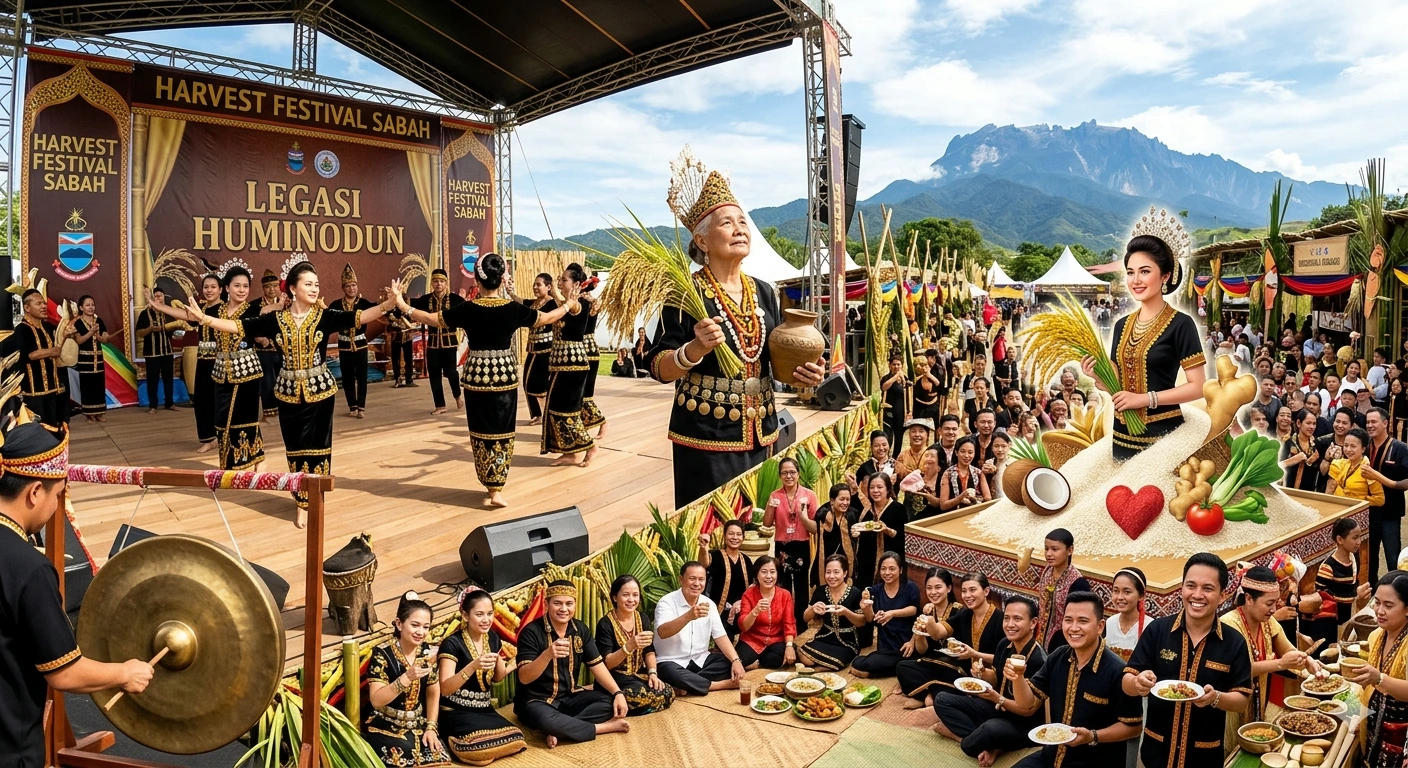
The Legend of Sacrifice: Unveiling the History of Kaamatan in Sabah
Every May, the air in the Land Below the Wind transforms. The rhythmic resonance of the gong fills the valleys, the aroma of hinava (fermented fish) wafts through the air, and the joyous greeting of “Kotobian Tadau Tagazo Do Kaamatan” echoes from the highlands of Kundasang to the coasts of Penampang.
But beyond the free-flowing tapai (rice wine) and the graceful Sumazau dance, do you know the ancient story that breathes life into this celebration?
1. The Origin: The Ultimate Sacrifice of Huminodun
The history of Kaamatan is not merely about a successful harvest; it is a story of divine love and sacrifice. According to the oral traditions of the Kadazandusun people, the world was once struck by a devastating famine.
The creator, Kinoingan, and his wife, Suminundu, looked upon the suffering of humanity with great sorrow. Their only daughter, Phorogoh (later known as Huminodun), was a maiden of unparalleled beauty and kindness. To save mankind from starvation, Huminodun volunteered to be sacrificed.
It is believed that upon her sacrifice, her body parts transformed into the life-giving staples of the people:
-
Her flesh became Padi (rice), embodying the rice spirit known as Bambaazon.
-
Her head became Coconuts.
-
Her heart became Ginger.
Because of her, the people survived. Thus, Kaamatan is celebrated as a gesture of eternal gratitude to Huminodun and the spirit of the grain.
2. Magavau: Restoring the Rice Spirit
Traditionally, the heart of Kaamatan lies in the Magavau ceremony. This ritual is conducted by the Bobohizan or Bobolian (high priestesses).
The purpose of Magavau is three-fold:
-
To search for and “rescue” the spirit of the rice that may have been lost or hurt during the harvest.
-
To invite the Bambaazon (rice spirit) back to the home or the granary.
-
To offer thanks and ensure a bountiful harvest for the coming year.
While modern celebrations have become more festive and commercial, the spiritual core remains a deep acknowledgement of the connection between man and nature.
3. The Evolution: From Village Tradition to National Pride
For centuries, Kaamatan was a localized village affair. It wasn’t until 1960 that the festival was officially recognized as a state-wide public holiday, thanks to the efforts of leaders like the late Tun Fuad Stephens and Datuk G.S. Sundang.
Today, the KDCA (Kadazan Dusun Cultural Association) in Penampang serves as the grand stage. It has evolved into a month-long celebration that unites all Sabahans, regardless of race or religion, showcasing the state’s unique “Muhibbah” (harmony) spirit.
4. Iconic Highlights of Kaamatan
If you are visiting Sabah in May, here are the “must-see” cultural pillars:
-
Unduk Ngadau: A prestigious cultural pageant held in memory of Huminodun. It isn’t just a beauty contest; it seeks a woman who embodies the grace, strength, and sacrificial spirit of the legendary maiden.
-
Sugandoi: A singing competition that celebrates the Kadazandusun language through traditional and contemporary melodies.
-
Traditional Sports: Watch or participate in Mipulos (arm wrestling), Monopogot (carrying heavy loads), and blowpipe competitions.
-
Sumazau Dance: Join the circle! This traditional dance mimics the flight of eagles and is the heartbeat of every Kaamatan gathering.
Final Thoughts
Pesta Kaamatan is a reminder that Sabah’s strength lies in its roots. It is a celebration of resilience, gratitude, and identity. Whether you are sipping Lihing for the first time or watching the Bobohizan perform a ritual, you are witnessing a living history that has survived the test of time.
“Kotobian Tadau Tagazo Do Kaamatan to all! May the spirit of Bambaazon bring us abundance and peace.”
Love this story? Share it on your social media and tell us your favorite Kaamatan memory in the comments below!

0 Comments